Step 1: Field ObservationDE-1A / DE-1B
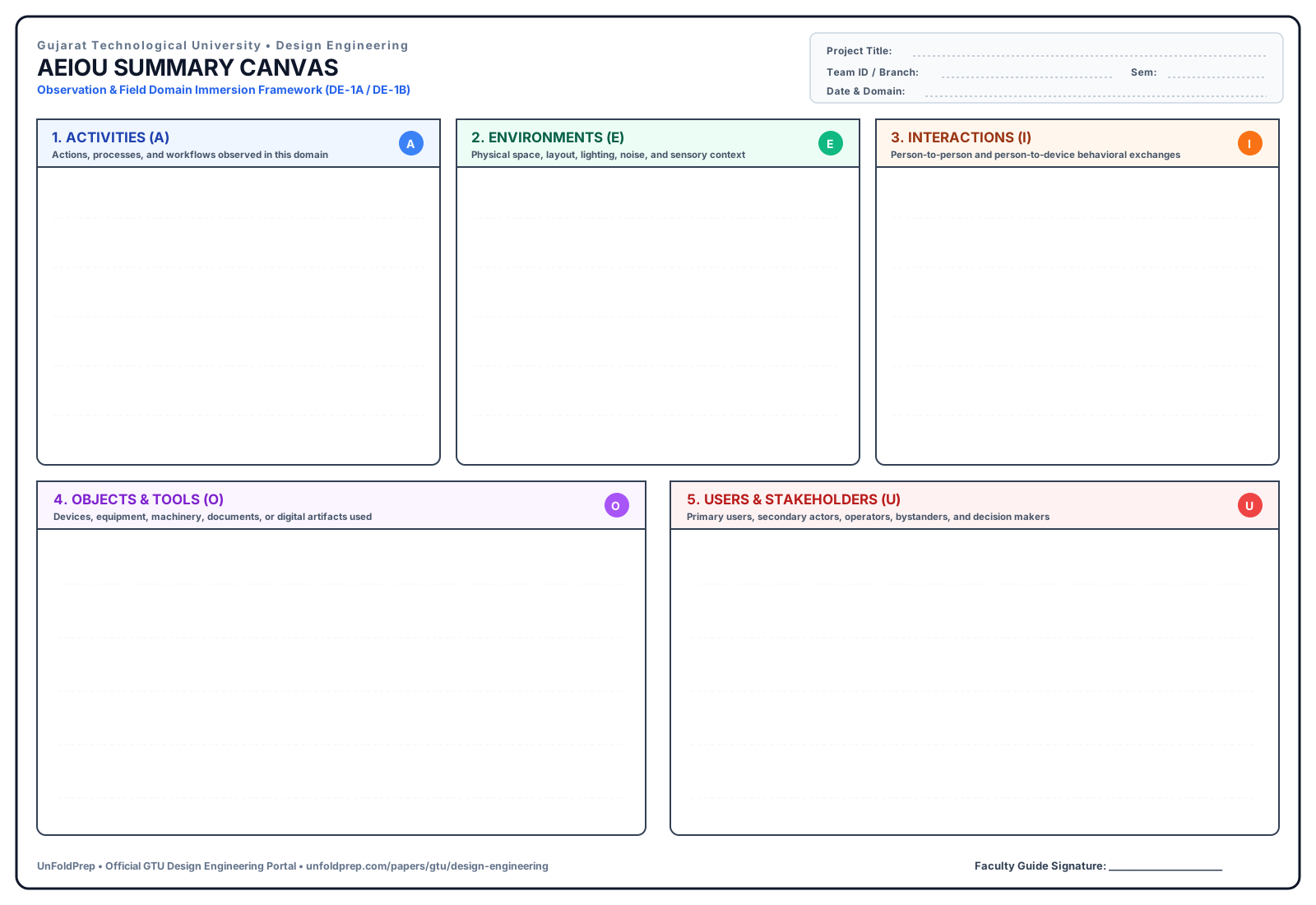
1. AEIOU Summary Canvas
Use this canvas in Semester 3 (DE-1A) to record field observations. You group your notes into 5 areas: what people are doing (Activities), where they work (Environments), how they interact (Interactions), what tools they use (Objects), and who is involved (Users).
View Sample Filled Example: Hospital Patient Flow Management
- Activities (A): Patient token registration, triage status checks, prescription verification, waiting outside OPD rooms.
- Environments (E): Noisy OPD waiting halls, dim emergency signage, crowded corridors, fluctuating room temperatures.
- Interactions (I): Patients asking receptionists about waiting times, doctors explaining lab reports, nurses calling token numbers.
- Objects (O): Paper OPD forms, manual token display boards, wheelchairs, medicine bottles, billing computers.
- Users (U): Rural elderly patients (primary users), duty nurses (secondary users), hospital administrators (stakeholders).
Step 2: User ResearchDE-1A / DE-2A
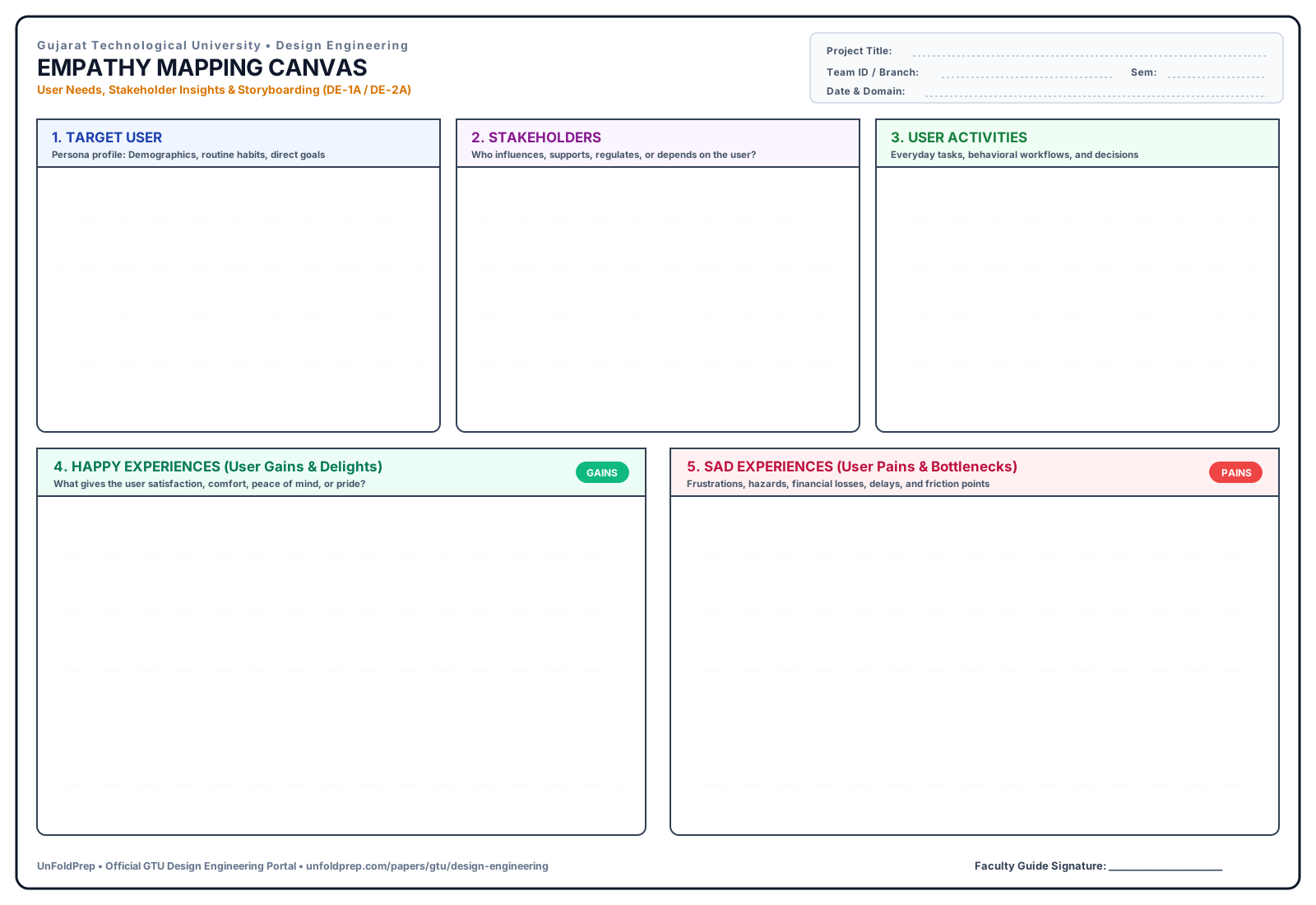
2. Empathy Mapping Canvas
Before jumping into engineering, use this canvas to understand the person who will use your solution. You map their background, who influences them, their daily routine, and storyboard their biggest frustrations (pains) and moments of relief (gains).
View Sample Filled Example: Perishable Crop Farmers
- User Persona: Ramesh Patel, 48-year-old tomato farmer in Anand district with basic Gujarati smartphone literacy.
- Stakeholders: Local APMC mandi traders, cold storage managers, transport truck drivers.
- Happy Experiences (Gains): Transparent crate rates on mobile, quick payment clearance, zero damage during transport.
- Sad Experiences (Pains): Spoilage caused by transit traffic delays, lack of small cold room slots, unpredictable mandi commission fees.
Step 3: Solution BrainstormingDE-1A / DE-1B
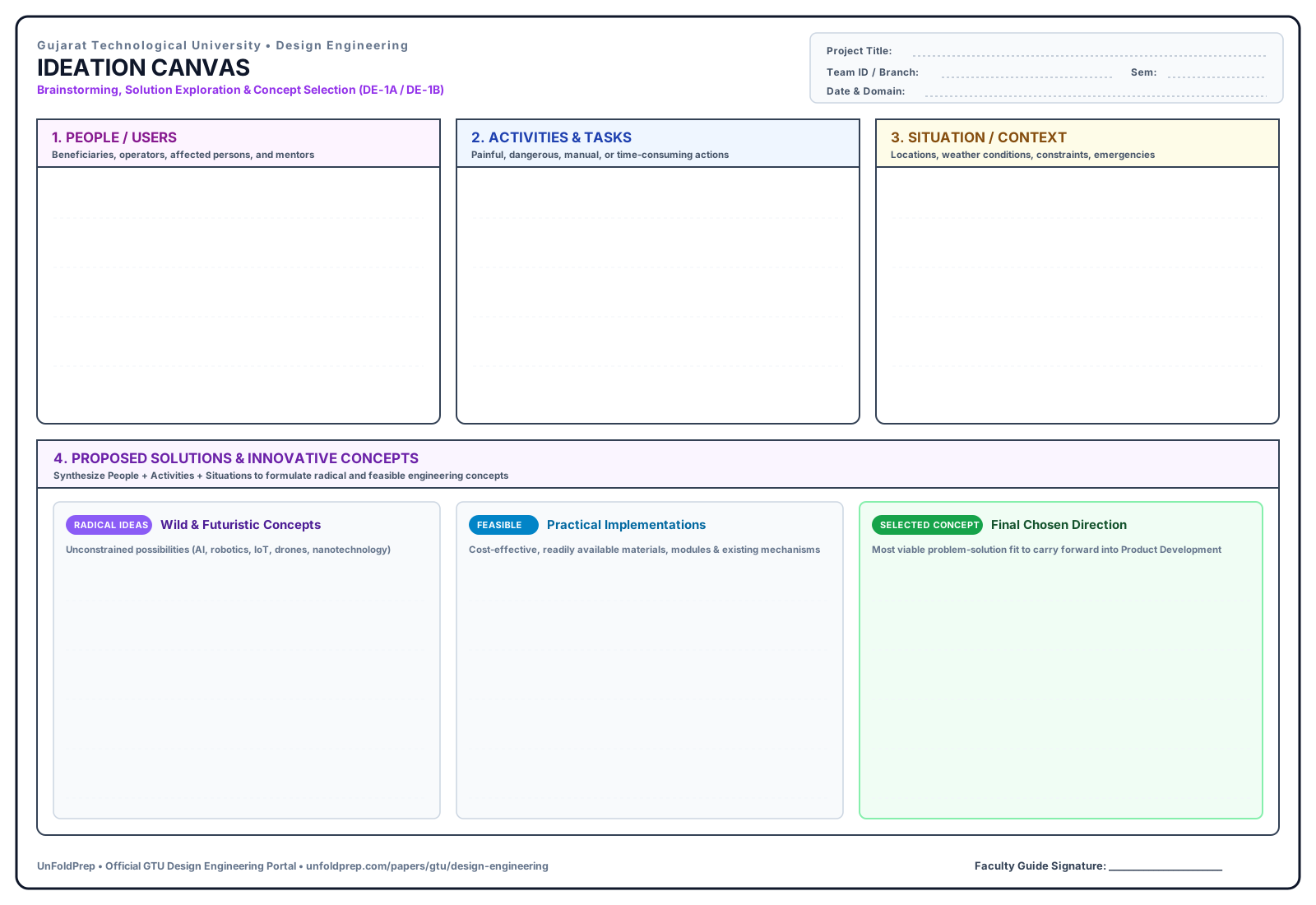
3. Ideation Canvas
Use this canvas in Semester 3 or 4 to brainstorm ideas. You list your target users, their tasks, and the setting, then develop 3 types of solutions: out-of-the-box wild ideas, practical engineering fixes, and your shortlisted final concept.
View Sample Filled Example: Electric Scooter Safety
- Wild Idea: Built-in roll cage with automated drone dispatch on road accidents.
- Practical Idea: Accelerometer on the helmet strap sending GPS coordinates over SMS during a sudden tilt greater than 65 degrees.
- Shortlisted Concept: Bluetooth Low Energy (BLE) Smart Helmet Interlock. The vehicle motor will not arm unless the chin-strap sensor is latched and the alcohol sensor detects zero breath alcohol.
Step 4: Architecture & TestingDE-2A / DE-2B
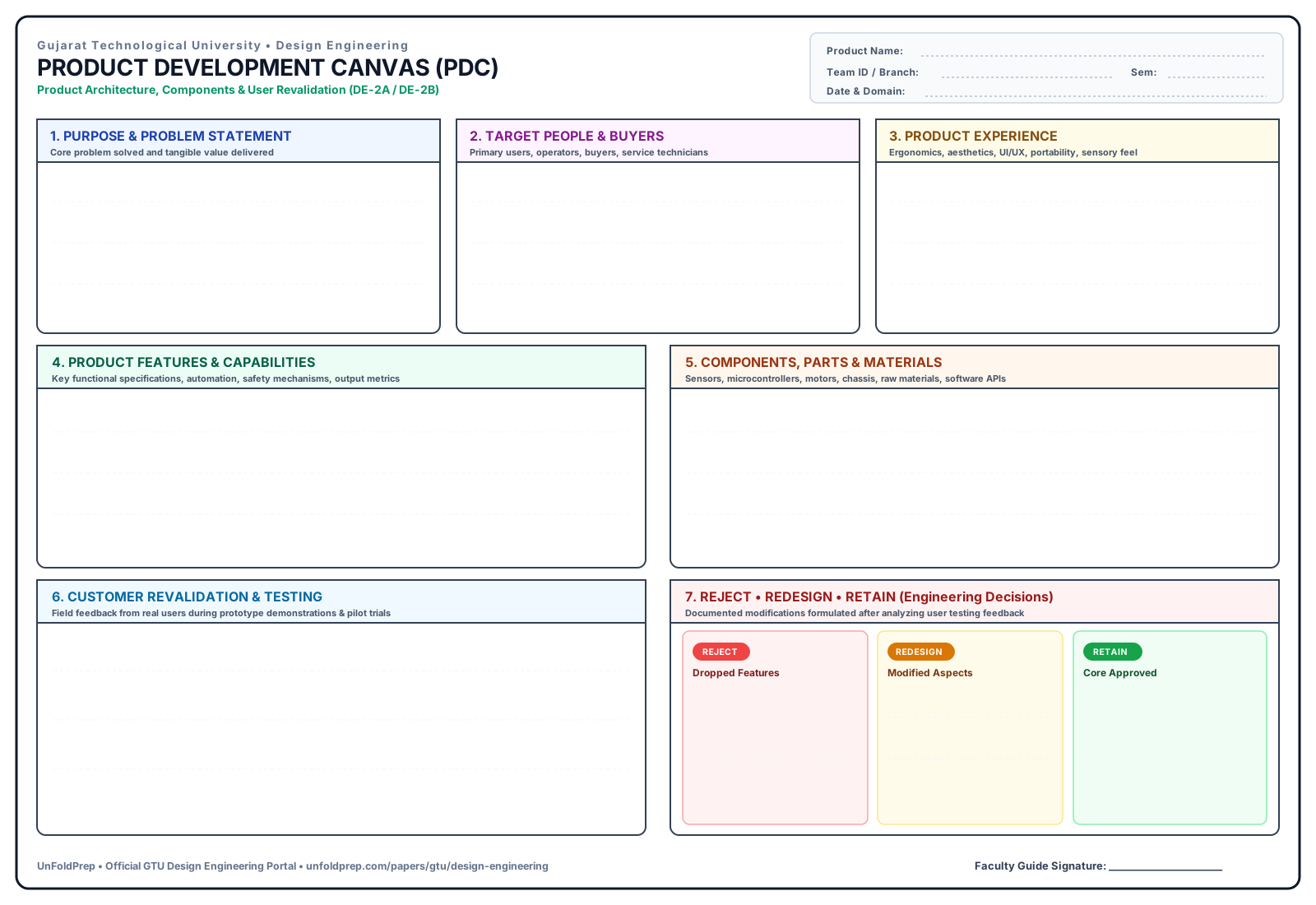
4. Product Development Canvas (PDC)
The main canvas for Semesters 5 and 6 (DE-2A and DE-2B). Here you turn your concept into technical engineering: listing exact sensors, microcontrollers, software tools, customer revalidation tests, and decisions on what features to Reject, Redesign, or Retain.
View Sample Filled Example: Solar Powered Drip Irrigation Controller
- Purpose: Cut irrigation water waste by 40% and stop root rot in cotton crops.
- Components: ESP32 microcontroller, capacitive soil moisture sensor, 12V DC solenoid valve, 10W solar panel with battery.
- Customer Revalidation: Farmers found Wi-Fi configuration too complicated in open fields. They requested missed-call and SMS control instead.
- Reject: Dropped 2.4GHz Wi-Fi module because of zero network range on farms.
- Redesign: Switched to GSM SIM800L module for simple phone call and SMS commands.
- Retain: Solar charging circuit and IP65 waterproof housing.